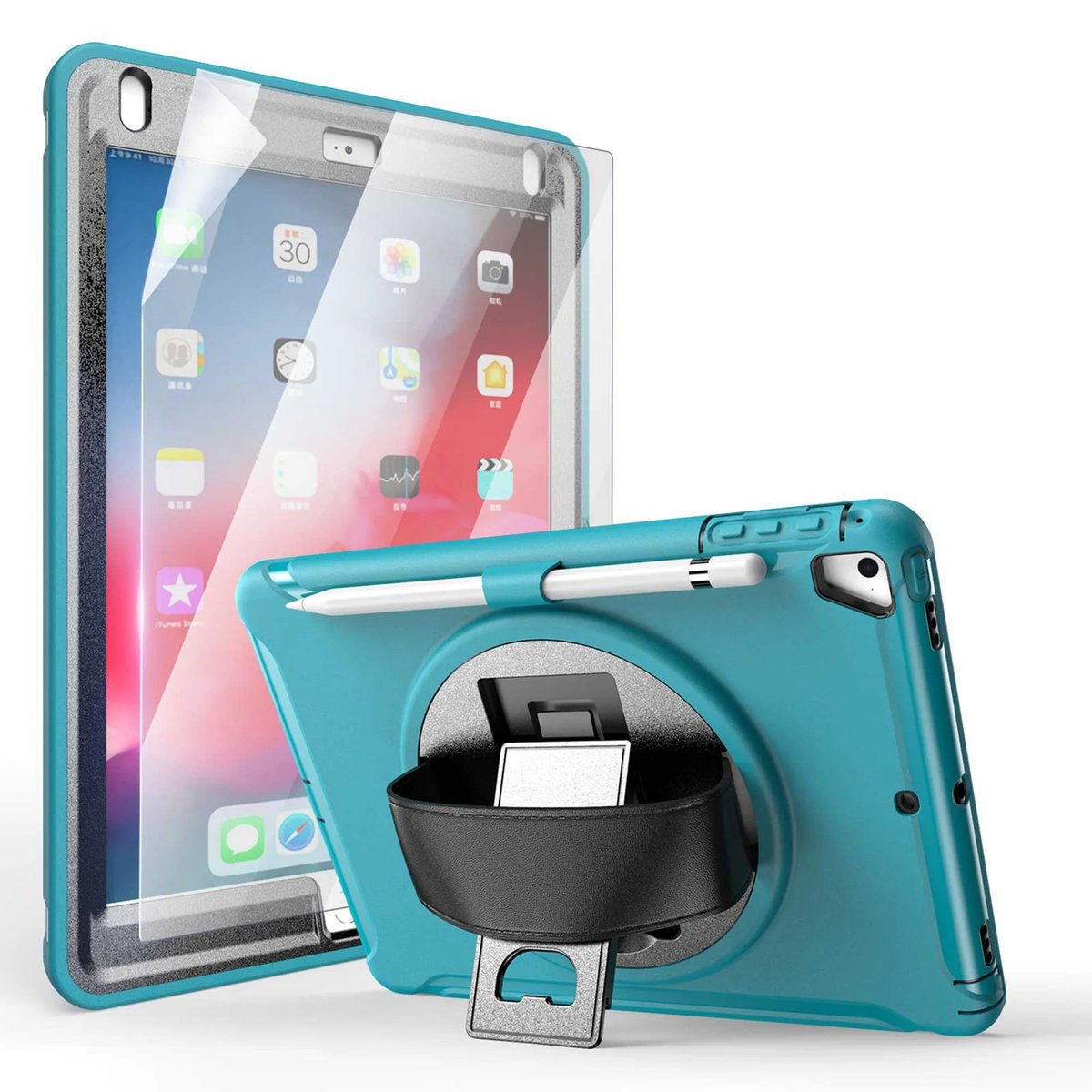
Your iPad 5th Generation is a workhorse, a travel companion, and often, an extension of your professional or creative life. Keeping it safe from the daily gauntlet of bumps, drops, and scratches is non-negotiable. But with a dizzying array of options, how do you truly understand the Protection Levels & Materials for iPad 5th Gen Covers to make an informed choice? It’s not just about aesthetics; it's about smart defense tailored to your lifestyle.
This isn't about buying any cover; it's about investing in the right protection that aligns with how and where you use your device. From the coffee shop table to a construction site, your iPad faces different threats, and its cover should reflect that reality.
At a Glance: Key Takeaways for iPad 5th Gen Cover Protection
- Match Protection to Lifestyle: Don't over-protect if you're careful, but don't under-protect if you're prone to accidents.
- Three Core Protection Levels: Basic (scratch/light bump), Moderate (everyday drops), and Rugged (heavy impact, environmental).
- Material Matters: Soft materials (silicone, TPU) absorb shock, hard materials (polycarbonate) distribute impact, and hybrids combine benefits.
- Screen Protection is Paramount: Always consider a screen protector in conjunction with your cover.
- Features Beyond Protection: Look for stand functionality, Apple Pencil holders, or keyboard compatibility if those are important to you.
- "Water-Resistant" is Not "Waterproof": Understand the difference; most covers offer splash protection, not submersion.
- Don't Forget Fit: Ensure any cover is specifically designed for the iPad 5th Generation to guarantee full access to ports and buttons.
Decoding Protection: What Does "Safe" Really Mean for Your iPad?
When you're sifting through endless options, the term "protection" can feel broad and vague. For your iPad 5th Gen, protection isn't a one-size-fits-all concept. It's a spectrum, ranging from guarding against minor scuffs to safeguarding against significant impacts and environmental hazards. Understanding these levels is your first step toward making a truly informed decision.
We generally categorize iPad cover protection into three main tiers: Basic, Moderate, and Rugged. Each tier caters to different usage scenarios and risk factors.
The Basic Shield: Guarding Against the Everyday Grime
This level of protection is for the careful user, someone whose iPad primarily lives on a desk, travels in a padded bag, or is handled gently. Its primary function is to prevent cosmetic damage and light wear-and-tear.
- Who it's for: Students, light office users, home users where drops are rare and minor.
- What it protects against:
- Scratches and scuffs: From keys in a bag, desk abrasions, or rings on fingers.
- Dust and fingerprints: Keeps the surface cleaner.
- Minor bumps: Absorbs negligible impacts from slight knocks.
- Light splashes: Offers a slight barrier against accidental liquid contact.
- What it doesn't protect against: Significant drops, heavy impacts, extreme environments, water submersion.
- Common materials: Thin TPU (thermoplastic polyurethane), felt, basic fabric, slim polycarbonate snap-on shells, thin leatherette.
- Thickness and weight: Minimal; often adds very little bulk to the iPad.
- Typical features: Smart Cover functionality (wakes/sleeps iPad), basic stand.
Think of basic protection as a stylish skin for your iPad. It makes it feel more substantial in hand, adds a personal touch, and offers peace of mind against the most common superficial damages. If you're looking for just enough protection without compromising the sleek design of your iPad 5th Gen, this is your starting point.
The Everyday Warrior: Moderate Protection for the Active Life
Most iPad users fall into this category. Your iPad travels with you, might be used in a family setting, or is regularly moved between different environments. This level balances good protection with manageable bulk and often integrates practical features.
- Who it's for: Commuters, casual travelers, families with kids (older ones), users who frequently move their iPad between rooms or outdoor spaces.
- What it protects against:
- Medium-height drops: Typically safeguards against drops from waist or table height (2-4 feet) onto hard surfaces.
- Moderate impacts: Cushions against accidental knocks or collisions.
- Screen damage (indirectly): Often features raised bezels or lips around the screen to prevent direct contact when placed face-down.
- Dirt and debris: Provides a more comprehensive seal than basic covers.
- What it doesn't protect against: Extreme heights, repeated heavy impacts, prolonged water exposure, very dusty or sandy environments without specific ratings.
- Common materials: Thicker TPU, silicone, dual-layer designs (hard polycarbonate shell with a soft TPU/silicone interior), synthetic leather with reinforced corners.
- Thickness and weight: Noticeable, but still comfortable for everyday handling; adds moderate bulk.
- Typical features: Multi-angle stands, Apple Pencil holders, often more tactile buttons, sometimes a hand strap.
This tier is where you start seeing clever engineering, like air-cushioned corners designed to absorb and disperse impact forces. These cases are designed for the "oops" moments that inevitably happen in a busy life.
The Indestructible Fortress: Rugged Protection for Extreme Conditions
For those whose iPad faces genuine hazards—whether in a tough work environment, during adventurous travels, or in the hands of very young children—rugged protection is essential. These covers prioritize survival above all else, often incorporating military-grade drop test standards.
- Who it's for: Construction workers, field technicians, extreme sports enthusiasts, parents of toddlers, users in industrial or outdoor settings.
- What it protects against:
- High-height drops: Certified to withstand drops from 6 feet or more, often onto concrete.
- Heavy impacts and crushing forces: Multiple layers and durable materials absorb significant energy.
- Dust, dirt, and sand: Port covers and tight seals prevent ingress.
- Splashes and rain: Often rated for water resistance (IPX ratings for specific cases, but few are fully submersible).
- Vibrations: Some designs offer vibration damping.
- What it doesn't protect against: Submersion in water unless explicitly rated waterproof, deliberate destruction, extremely sharp punctures without specialized layers.
- Common materials: Multiple layers of high-density polycarbonate, thick TPU, often with integrated screen protectors, sometimes rubberized exteriors for grip.
- Thickness and weight: Substantial; significantly increases the iPad's footprint and heft.
- Typical features: Integrated screen protectors, sealed port covers, heavy-duty kickstands, hand straps, sometimes shoulder straps or attachment points.
When a manufacturer claims "military-grade drop protection," they're usually referring to MIL-STD-810G, a U.S. military standard that covers various environmental tests, including drops. It's a good benchmark, but always check the specific rating and context. These cases might sacrifice some aesthetic appeal for ultimate durability, but for mission-critical use, it's a small price to pay.
The Anatomy of Defense: Understanding iPad Cover Materials
Just as crucial as the protection level is the material (or combination of materials) your iPad 5th Gen cover is made from. Each material brings its own set of characteristics to the table, influencing durability, shock absorption, grip, aesthetics, and even price. Let's break down the most common players.
Soft & Flexible Protectors: The Shock Absorbers
These materials excel at absorbing and distributing impact forces, much like a car's crumple zone. They often provide excellent grip.
- Silicone:
- Pros: Excellent shock absorption, soft to the touch, very grippy (prevents slips), affordable, dust-resistant (when treated).
- Cons: Can be a lint magnet if not treated, may stretch over time, can feel bulky, less rigid protection against punctures.
- Protection Level: Primarily basic to moderate. Great for corner and edge protection against drops.
- Best for: Everyday users needing good grip and basic drop protection, especially in environments where slipping is a concern.
- Example: A simple, brightly colored silicone sleeve that adds a tactile feel.
- TPU (Thermoplastic Polyurethane):
- Pros: More durable than silicone, excellent flexibility and elasticity, good shock absorption, resistant to oils and grease, usually clearer than silicone (if desired), holds its shape well.
- Cons: Can yellow over time (especially clear variants), less grippy than silicone but more so than hard plastic.
- Protection Level: Basic to moderate. A step up from silicone in terms of rigidity and longevity.
- Best for: Users wanting a balance of flexibility, shock absorption, and a slightly slimmer profile than silicone. Often used in hybrid cases.
- Example: A clear, flexible shell that shows off the iPad's design while protecting from scratches and minor drops.
- Felt & Fabric:
- Pros: Soft on the iPad's finish, excellent scratch protection, lightweight, stylish, often made from sustainable materials.
- Cons: Offers minimal impact protection, not water-resistant, can stain easily, not a "case" but often a sleeve.
- Protection Level: Basic (primarily scratch prevention).
- Best for: Keeping your iPad pristine inside a bag or for a very careful desktop user.
- Example: A stylish wool felt sleeve that slides into your backpack, offering a cozy cushion.
Hard & Rigid Defenders: The Impact Dispersers
These materials are designed to resist direct force and spread impact energy over a larger area, protecting the device's internal components.
- Polycarbonate (PC):
- Pros: Extremely strong and rigid, lightweight, resistant to impacts and scratches, often used as the outer shell in rugged cases, can be molded into precise shapes.
- Cons: Can crack under extreme pressure, offers poor shock absorption on its own (needs a soft inner layer), can be slippery.
- Protection Level: Moderate to rugged. Essential for distributing impact and preventing direct force.
- Best for: The outer layer of dual-layer cases, providing structural integrity and impact resistance.
- Example: The hard back of a folio case, or the rigid outer shell of a heavy-duty cover.
- Hard Plastic (e.g., ABS):
- Pros: Inexpensive, lightweight, can be molded easily, good for basic snap-on shells.
- Cons: Brittle compared to polycarbonate, less impact resistant, prone to cracking on drops.
- Protection Level: Basic.
- Best for: Very simple, inexpensive back covers for scratch protection.
The Blended Best: Hybrid Materials
Many of the best iPad 5th Gen covers leverage a combination of materials to achieve superior protection. This usually involves a soft inner layer for shock absorption and a hard outer layer for impact distribution and structural integrity.
- Dual-Layer (PC + TPU/Silicone):
- Pros: The best of both worlds – hard outer shell resists punctures and disperses impact, soft inner layer absorbs shock. Superior drop protection.
- Cons: Adds more bulk, can be heavier.
- Protection Level: Moderate to rugged. This is the go-to design for most reliable protective cases.
- Best for: Almost anyone seeking serious drop protection without going full "rugged."
Classic & Premium: Leather (Genuine and PU)
Leather offers a distinct aesthetic and feel. It’s more about style and a pleasant tactile experience, with varying degrees of protection.
- Genuine Leather:
- Pros: Luxurious feel, ages beautifully (patina), durable over time, unique aesthetic, good grip.
- Cons: Expensive, requires maintenance, not inherently shock-absorbent (needs an inner frame), can scratch, not water-resistant.
- Protection Level: Basic to moderate (depending on the internal frame).
- Best for: Users prioritizing premium aesthetics and feel, willing to pay for quality, and seeking moderate protection.
- PU Leather (Polyurethane Leather / Faux Leather):
- Pros: More affordable than genuine leather, water-resistant (surface), easy to clean, consistent look, often lighter.
- Cons: Lacks the breathability and unique aging of genuine leather, can crack or peel over time, less durable overall.
- Protection Level: Basic to moderate.
- Best for: Budget-conscious users who like the leather aesthetic without the premium price or maintenance.
Specialty Materials & Features: Beyond the Cover
- Tempered Glass Screen Protectors: While not part of the case itself, a good tempered glass screen protector is an absolute must-have complement to any cover. It defends against scratches and can absorb impact from direct screen drops, preventing costly display repairs.
- Integrated Screen Protectors: Found in many rugged cases, these are built directly into the case design, offering seamless (and often water-resistant) screen protection.
- Rubberized Finishes: Often applied to polycarbonate or TPU, these improve grip and add a soft-touch feel, making the iPad less likely to slip from your hands.
Making Your Choice: A Decision Framework for Your iPad 5th Gen
Now that you understand the different levels of protection and the materials that provide them, it's time to marry this knowledge with your personal needs. Choosing the right cover isn't just about what looks good; it's about what performs best for your life.
Step 1: Assess Your Environment and Usage Habits
Honestly evaluate where and how you typically use your iPad 5th Gen.
- Office/Home Desk User: Primarily indoors, low risk of drops, main concern is scratches and light bumps.
- Recommendation: Basic protection, slim folio or snap-on shell, possibly felt sleeve for transport.
- Commuter/Student/Frequent Traveler: iPad moves a lot, exposure to crowded spaces, occasional bumps or accidental drops from lap/table.
- Recommendation: Moderate protection, dual-layer case, sturdy folio with reinforced corners.
- Family with Young Children: iPad is shared, high risk of drops (from small hands!), spills, rough handling.
- Recommendation: Rugged protection, multi-layer case with integrated screen protector, silicone outer layer for grip.
- Outdoor/Field Work/Adventure Enthusiast: Exposed to elements, dust, dirt, higher drops, moisture.
- Recommendation: Rugged protection, military-grade drop tested, sealed ports, possibly water-resistant (IP-rated).
Step 2: Consider Your Personal Priorities
Beyond pure protection, what else matters to you?
- Aesthetics & Style: Do you prefer a sleek, minimalist look, or something more expressive? Are you willing to sacrifice some bulk for style?
- Budget: Covers range widely in price. How much are you willing to invest? Remember, a good cover can save you hundreds in repair costs.
- Ergonomics & Grip: Do you need a case that's easy to hold, especially for extended periods? Some materials offer better grip than others.
- Weight & Bulk: Are you sensitive to adding extra weight or thickness to your iPad? Rugged cases can significantly alter the device's profile.
- Integrated Features:
- Stand Functionality: Do you need multiple viewing angles for typing, watching, or drawing?
- Apple Pencil Holder: If you use an Apple Pencil, a secure place to store it is crucial.
- Keyboard Compatibility: If you frequently use a keyboard, ensure the case doesn't interfere.
- Port Covers: Are sealed ports important to you for dust/splash protection?
- Hand/Shoulder Strap: For hands-free carrying or secure handling in dynamic environments.
Step 3: Don't Forget the Screen!
Even the most robust case won't fully protect your screen from a direct, sharp impact unless it has an integrated screen protector.
- Tempered Glass: Highly recommended for all protection levels. It's an invisible shield against scratches and can absorb significant direct impact.
- Integrated Screen Protectors: Common in rugged cases, these offer seamless, edge-to-edge protection, often with water and dust resistance. Be aware of potential impact on touch sensitivity or clarity in some cheaper options.
Step 4: The Crucial Fit Check
The iPad 5th Generation has specific dimensions and port placements. Ensure any cover you consider is explicitly labeled for the "iPad 5th Generation" (also known by model numbers A1822 and A1823). Covers for other iPad models (even if they look similar) might block ports, speakers, or the camera, rendering them useless. Always double-check this detail. A quick search for a complete iPad 5th generation cover guide can often help clarify compatibility.
Navigating Common Questions & Pitfalls
Even with all this information, you might still have lingering questions or fall prey to common misconceptions. Let's address a few.
"Military Grade" – What Does It Really Mean?
As mentioned, "military-grade" typically refers to MIL-STD-810G, a series of laboratory tests. However, simply saying a case is "military-grade" isn't enough. Look for details: which tests were performed (e.g., specific drop heights), and what were the results? A true military-grade case will specify this, rather than just using a buzzword. It's a useful benchmark, but context is key.
Are "Water-Resistant" and "Waterproof" the Same?
Absolutely not.
- Water-resistant means the device (or case) can resist water penetration to some degree, like splashes or light rain. Most moderate and rugged cases offer this.
- Waterproof means it can be fully submerged in water for a specified depth and duration without damage. Very few iPad cases are truly waterproof; if one claims to be, look for an IP (Ingress Protection) rating (e.g., IP67, IP68) which specifies its resistance to both solids and liquids. Without an IP rating, assume it's water-resistant at best.
Does a Thicker Case Always Mean Better Protection?
Generally, yes, up to a point. More material often means more layers for shock absorption and impact dispersion. However, smart design plays a huge role. A well-engineered thinner case with air-cushioned corners and strategic material placement can outperform a poorly designed, overly thick case. Don't judge solely by bulk; look for design features.
Why Do Some Cases Feel So Much More Expensive?
Price differences often boil down to:
- Materials: Genuine leather, high-quality polycarbonate, and advanced polymers cost more.
- Design & Engineering: Precision molding, multi-layer construction, patented shock-absorption technologies, and rigorous testing add to R&D costs.
- Brand Reputation: Established brands often command a premium due to consistent quality and customer support.
- Integrated Features: Built-in batteries, keyboards, or complex stand mechanisms naturally increase the price.
A higher price doesn't always guarantee better protection, but extremely cheap cases often cut corners on material quality and design, leading to less reliable defense.
Can I Use a Keyboard Case as My Primary Protection?
Many keyboard cases offer moderate protection, especially in folio styles that cover both the front and back. However, they are often designed with productivity, not extreme ruggedness, in mind. If your primary need is protection, especially against significant drops, consider a separate protective case and a detachable Bluetooth keyboard, or a keyboard case from a brand known for durable products.
Protecting Your Investment: Maintenance and Longevity
Even the best iPad cover needs a little love to perform optimally and last.
- Regular Cleaning: Dust, dirt, and oils can build up, affecting grip and potentially scratching your iPad. Wipe down your cover regularly with a damp, soft cloth. For silicone or TPU, mild soap and water can work. For leather, use a specialized leather cleaner.
- Inspect for Damage: Periodically check your cover for cracks, tears, or worn-out corners. Even small damage can compromise its protective capabilities. If a rugged case's port covers are torn, its water or dust resistance will be gone.
- Avoid Extreme Temperatures: Leaving your iPad (and cover) in direct sunlight or a very hot car can degrade materials like TPU and silicone over time, making them brittle or discolored.
- Screen Protector Care: Replace your tempered glass screen protector if it cracks or gets severely scratched. It has done its job absorbing impact, and a new one will restore full screen defense.
The Final Word: Confidence in Your Choice
Choosing the right cover for your iPad 5th Generation is a balancing act. It's about understanding the specific threats your device faces, the capabilities of various materials, and how these align with your personal preferences for style, bulk, and features. There's no single "best" cover, only the best cover for you.
By taking the time to consider your lifestyle, assess your priorities, and understand the technical aspects of Protection Levels & Materials for iPad 5th Gen Covers, you're not just buying a piece of plastic or leather. You're making a strategic investment in the longevity and usability of your valuable device. Go forth, protect your iPad, and enjoy it with peace of mind.